All About Containers - The Physical Edition
Every time I work on a new project, I end up acquiring more small components and tools that come in those flimsy, unreliable plastic containers. Time to solve the problem for the foreseeable future.
I’ve always been passionate about neatly organising my digital life. I extensively use linux containers for shipping every web project (including this blog!). My digital documents are all organised, tagged, and backed-up — going all the way back to my primary school homework. My physical life… not so much.
Given that so much of our life is digital now, this has served me well. I also enjoy creating physical things with my 3D printer — something that I am getting more into. I don’t have a dedicated workshop (though I think that I would really enjoy woodworking — maybe a new hobby for the future). Instead, my desk becomes my temporary working space, which gets tidied away on completion.
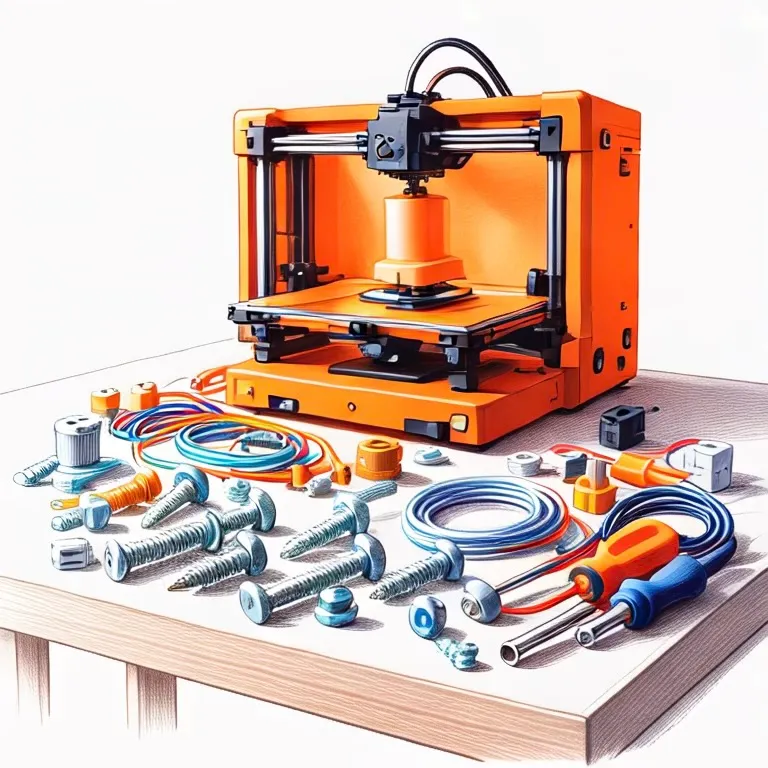
Each new project almost always requires me to buy some new small components — screws, heat-set inserts, random electrical connectors — and my strategy up until now has been to put all of these into the box.
One big box. No organisation. Pure chaos.
Like my childhood of Lego building, finding that one bit that I needed involved a deep dig into the depths of the box.
Larger part storage
Euro Boxes
I am an unapologetic fan of European standards. We have USB C everywhere, metric measurements, and cookie banners. Okay, I can’t stand cookie banners, but the rest is pretty good.
The Eurobox standard is a thing of beauty.
Stackable, nestable, interoperable between manufacturers.
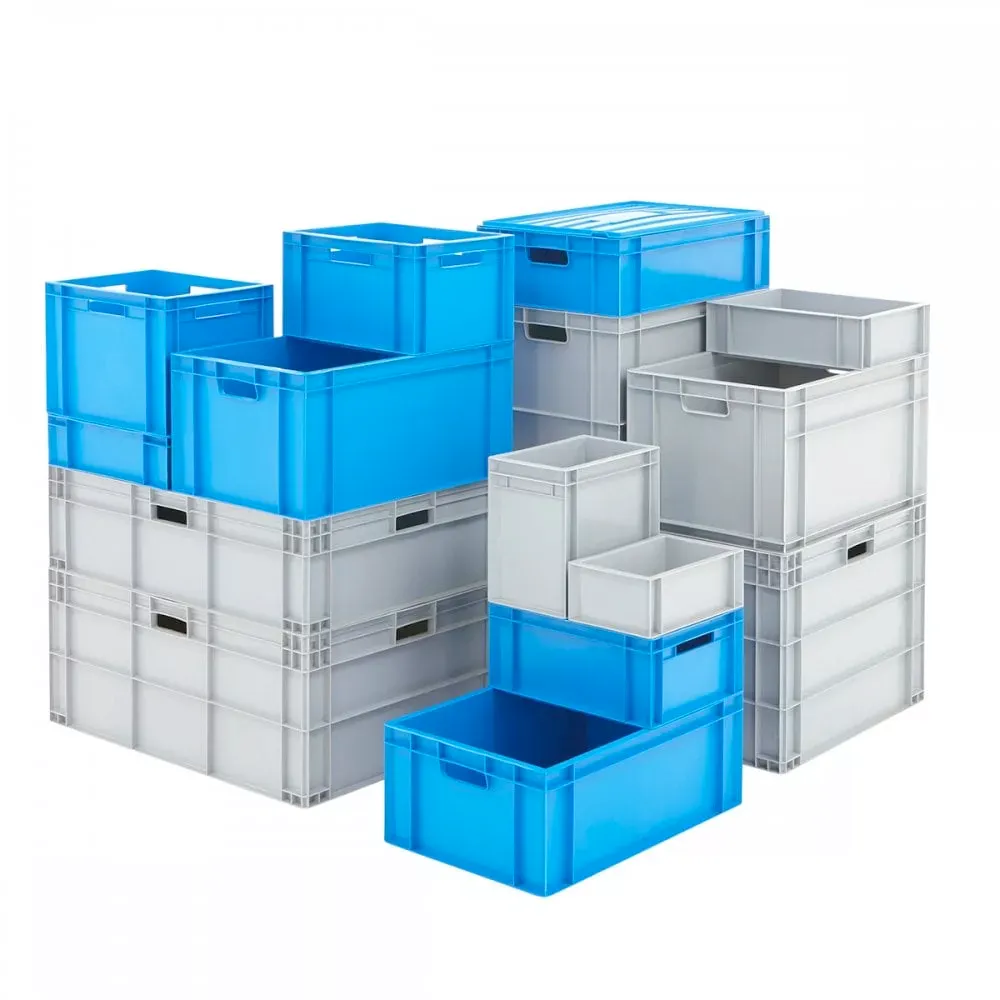
The base box size is 30x40cm, with boxes of 20x30cm, 40x60cm also available — like a fractal. Two 20x30cm boxes stack perfectly on top of a single 30x40cm box, and there are hundreds of manufacturers producing the boxes in various depths and designs to suit every use.
I actually already own two in the form of my pizza dough trays.
And the other great part: they are cheap! A 30x40cm box costs anywhere from £4 to £6.
The boxes are totally empty inside, so not really suitable for small part storage, but perfect for larger things like tools and large components. Similar to the box for my 3D printer projects, we have the cupboard at home which has become a dumping ground for everything from spare lightbulbs, batteries, and wrenches to bandaids and a small first aid kit.
I have purchased a bunch of these Euro boxes to organise all of these items into domains:
- Electrical
- Plumbing
- Woodworking
- Decoration
- First Aid
- Bicycle repair
- Batteries and chargers
- etc.
We are fortunate that our cabinets are almost exactly sized to fit stacks of 30cm-wide boxes in them! At some point, I plan to build some rails, but for now, stacking will do.
Small Part Storage
Now that the big stuff is taken care of, time to focus on the small stuff.
3D printing projects often call for fastening hardware, and luckily the world seems to have standardised on metric screws and bolts for this purpose. Amazon and Aliexpress sell a plethora of 1000+ part variety boxes of M3, M4, and M5 screw/bolts/nuts in various lengths and head shapes.
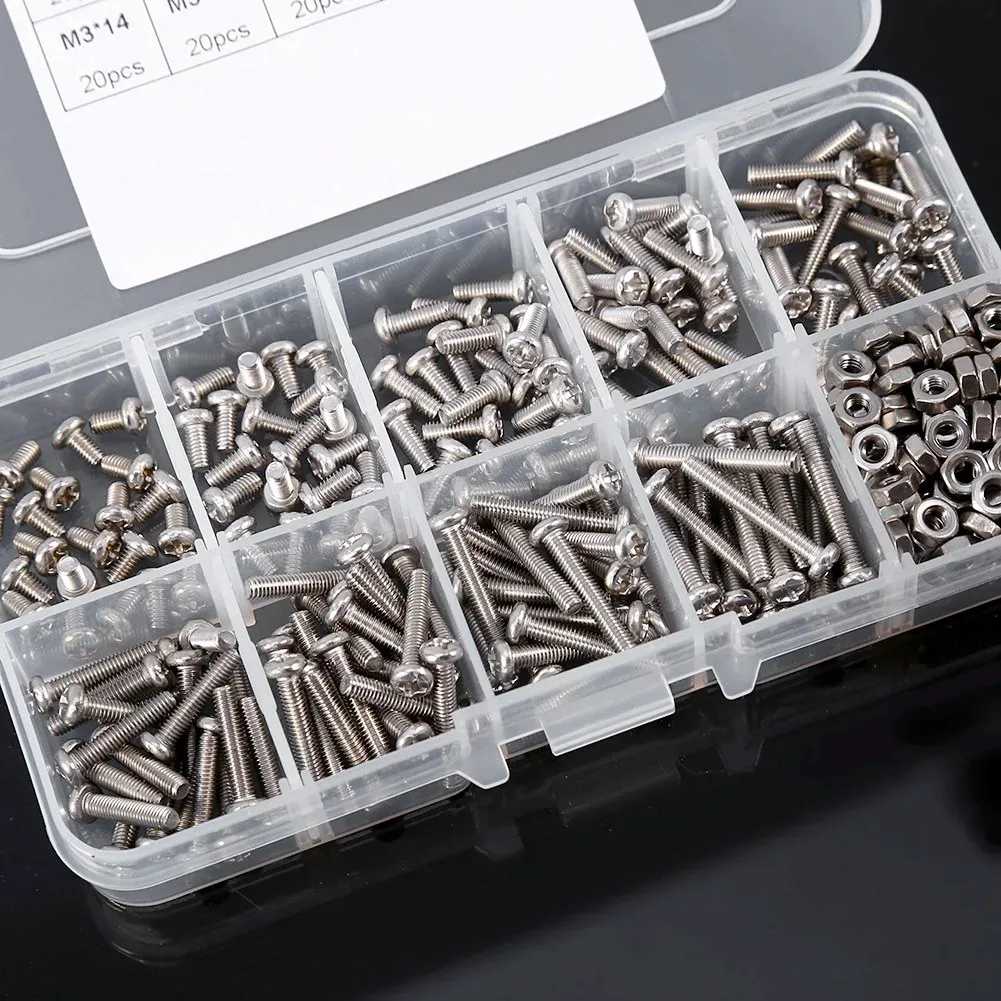
The little boxes that they come in are flimsy, cheap, and have these annoying removable dividers that always seem to pop out, mixing screws of various lengths into one frustrating mess.
I want to find a new home for all of these parts.
Sortimo
I grew up loving and watching Mythbusters on TV, and I still follow Adam Savage’s “Tested” channel on Youtube. In his workshop, he has a wall of storage containers, and he has made a few in-depth videos showing the process of building his parts wall.
Adam uses a box system called Sortimo, which is designed and built by a German company with the same name. As you will soon see, the Germans are really good at this storage stuff! The Sortimo system was primarily designed for construction contractors to transport tools and materials to/from worksites in vans. They also sell complete van racking for almost every type of commercial van imaginable.
By all accounts, Sortimo looks like a great system. The only discernable drawback I can find is that each box is quite expensive. Clocking in at around £80 per box, the price quickly adds up. The boxes also don’t conform exactly to the Eurobox sizing.
Gridfinity
For anyone with a 3D printer, Gridfinity is hard to miss.
Designed by a generous random internet stranger, the Gridfinity standard is based on a 42mm grid size, with literally thousands of bins and tool holder designs available for free online.
It has been designed from the ground up to be perfect for 3D printer owners to create their own grid and bins unique to their setup.
The problem: there are no good premade boxes or cases available off-the-shelf. Some very talented people have designed totally printable cases, that can even split into multiple parts for printing on smaller printers. On my Prusa MK3S+ printer, with a bed size of 250×210mm, it would have taken more than 24 hours to print a case, and used about 1KG of filament per case, which would actually cost more than the injection-moulded alternatives below — not to mention the electricity and 24+ hours of my time.
I like the idea of printing my own bins to fill out the box, but I would like the box itself to be an off-the-shelf product that I can just buy. Also, there are no Gridfinity-compatible cases available for purchase like this (yet?) — so the search continues.
Auer Packaging Assortment Box
Enter Auer Packaging.
This German company specialises in all things storage. Going down a deep forum rabbit hole led me to this company, who sell assortment boxes in a variety of sizes — including the 30x40cm and 40x60cm Eurobox sizes.
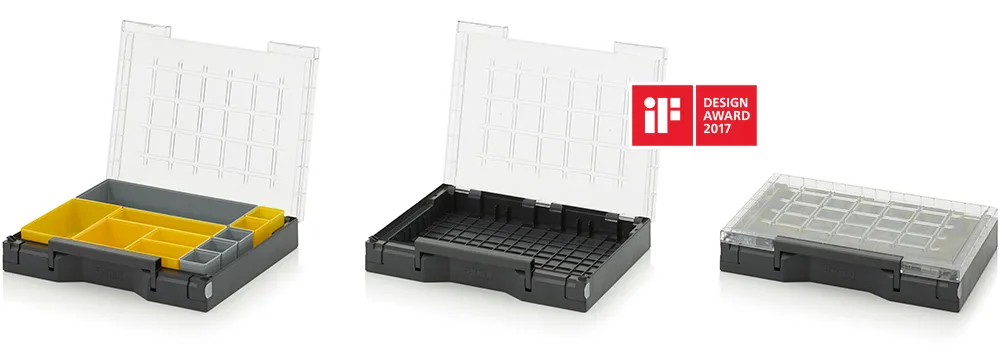
The individual component bins are compatible with the Sortimo grid system, and there are plenty of well-designed bins ready for 3D printing available on the web.
These are the insert boxes that I have been printing and using.
They are also relatively affordable! I ordered mine directly from Auer, but I found out later that there is a distributor called Solent Plastics (who could stand to improve their SEO) in the UK who sell them locally for around £13 per box. For anyone in the UK, this is probably the best option in a post-brexit world.
Interestingly Auer are also a major manufacturer of the Euro Boxes for larger part storage that I mentioned up above, and on close inspection of my pizza dough trays, they are brandishing a small embossed Auer logo too.
I think I found my winner!
Or so I thought — until I discovered one more option that made me reconsider everything.
Systainer
While researching the Auer boxes, I kept seeing mentions of a different system: Systainer. Part of a very large tool ecosystem, the Systainer standard has a long history, and is probably made most famous by Festool.
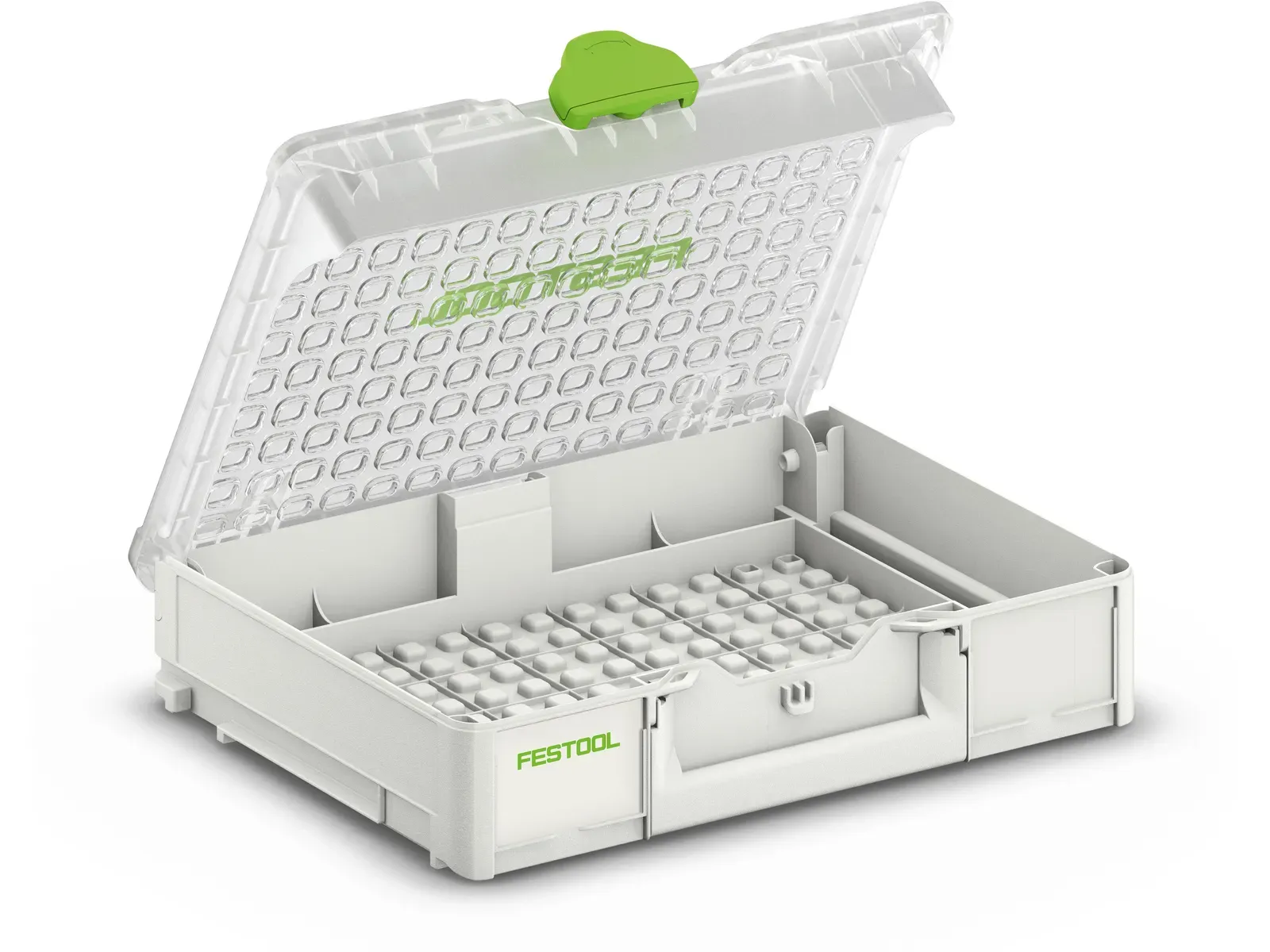
These organiser boxes are robust, also fit perfectly with a 30x40cm outer dimension, and feature a very clever T-lock system to lock stacked boxes together.
Festool are probably the most famous manufacturer selling these boxes, but there are plenty of other companies selling the exact same boxes in a different colour scheme.
Makita, Mafell, Metabo, HiKOKI — all sell toolboxes and organisers that are interoperable and fit together perfectly.
Behind the scenes, it is actually yet another German company called Tanos who manufacture these boxes for all of the aforementioned companies.
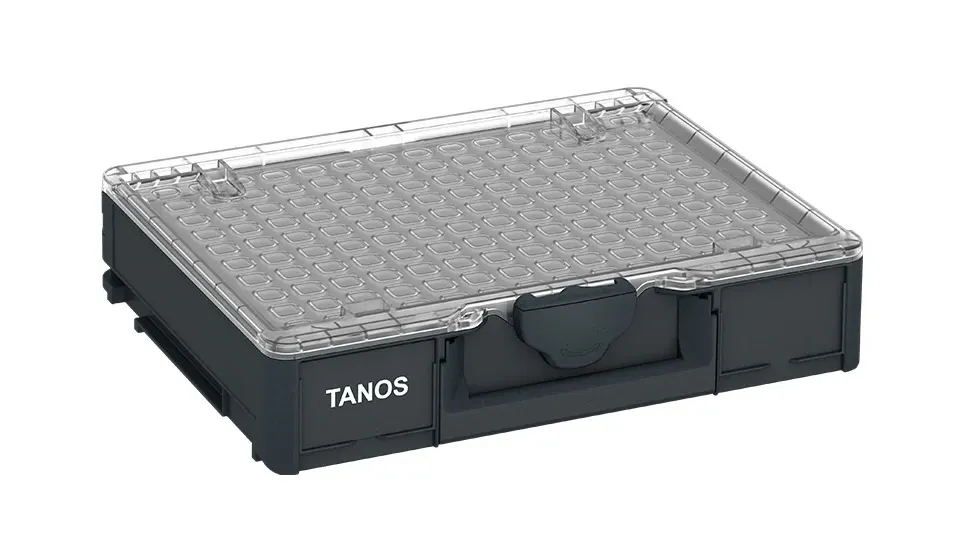
From companies such as Festool, who are in the primary business of selling premium powertools, the organiser boxes are quite expensive — on par with the Sortimo boxes at around £76 per box at the time of writing.
Buying the exact same box with the minimal Tanos branding (in an attractive dark grey colour), the same box costs only £45. I bought mine from this UK-based reseller.
There is a great open-source 3D-printable bin system as well, with bins covering every imaginable size.
Compared to the Auer Packaging assortment boxes, the Systainer box has a few main advantages:
- A smaller grid size meaning that 1x1 boxes are the perfect size for small components without needing the bin to be internally subdivided.
- A better grid design with larger notches on the base that hold the bins securely against the lid notches.
- The lid is stronger, with less flex when carried sideways.
- The T-lock mechanism means that not only do the cases stack perfectly on top of one another, but they lock in place too. The Auer boxes stack, but don’t lock.
Some other alternatives…
Milwaukee Packout. DeWalt T-STAK. Harbour Freight.
There are plenty of other storage systems out there, and each with their own merit.
For me, the lack of standard external sizing using the Eurobox standard rules most of these out. The vendor lock-in is bad enough as a user of Apple products, I don’t want to be locked-in to my boxes too!
This is obviously a UK-centric view, and our proximity to Germany — who seem to be the storage kings of Europe — probably skews my choices.
What setup did I decide upon?
In my case, I have decided on a combination with one commonality: all boxes will fit the Eurobox standard external sizing.
I have ended up buying:
- A bunch of 30x40cm euro boxes, in various depths, for organising larger tools, equipment, and larger parts (lightbulbs, spare sockets, etc).
- A few Auer Packaging Assortment Boxes to store the majority of mid-sized consumable components for the whole house: things like fuses, Wago connectors, switches, etc. Also some small tools like my soldering iron and electric screwdriver.
- A Systainer Organiser (only one, for now) for storing small components for my 3D printing projects, like M3–M5 bolts/nuts, signal-level wires, etc.
In truth, if the Systainer system was cheaper (£13 vs £45 per box), I would probably only use this rather than mixing in the Auer boxes — but I can still buy more than three Auer boxes for the price of one Systainer. At least they are the same size, so if I change my mind in the future they will still fit in the same rack!
There you have it: you now know everything that I know about boxes.
Now to actually get everything organised — wish me luck!